
Teen Anxiety Treatment in Edmond, OK: What Works
If you're searching for anxiety treatment in Edmond, OK, you've probably already tried reassurance, routine, maybe a few deep breaths before a big test or a hard conversation. Willpower rarely fixes anxiety in teens and young adults. Anxiety lives in the nervous system, sometimes in brain activity patterns a teen can't control by trying harder. In my Edmond practice, I work with anxious teens, young adults, and the parents trying to help them. I use Cognitive Behavioral Therapy, Acceptance and Commitment Therapy, and QEEG-guided neurofeedback, a brain-mapping approach that lets me build treatment around your child's actual brain instead of a generic protocol.
Understanding Anxiety in Teens and Young Adults
Anxiety is the most common mental health concern among adolescents in the United States. National data suggests that around 16% of 12- to 17-year-olds have a current anxiety diagnosis, while nearly a third will experience an anxiety disorder at some point during their teen years. Other federal survey data puts adolescent anxiety diagnosis rates in a similar range, with anxiety consistently reported as the most common behavioral health condition among 12- to 17-year-olds. Girls are diagnosed with anxiety at nearly twice the rate of boys, according to CDC and national survey data, though I see plenty of anxious teen boys in my Edmond office who are simply better at hiding it.
Why High-Achieving Communities Like Edmond See Their Own Pressures
Local anxiety numbers specific to Edmond aren't tracked separately from state and national data, but research on teens in affluent, high-achieving communities is worth paying attention to here. Psychologist Suniya Luthar's research, which began in the 1990s, found that adolescents in high-achieving school communities can show anxiety, depression, and substance use at two to three times the national average, with some individual school studies finding rates six to seven times higher than national norms for that age group (see Psychology Today's summary of that research). Luthar's work traced the pressure to a specific pattern: kids whose sense of self-worth gets tied to achievement, competitive academics, and packed extracurricular schedules, often alongside growing emotional distance from parents starting as early as middle school. Edmond, with its strong schools, competitive youth sports culture, and college-focused expectations, has a lot in common with the communities Luthar studied. That doesn't mean every Edmond teen is at risk, but it does mean achievement pressure deserves a place on the list of anxiety triggers parents watch for, right alongside social media and general adolescent stress.
Signs Your Teen May Be Struggling
Anxious teens don't always look "anxious." Sometimes it shows up as irritability, stomachaches before school, avoidance of social plans, perfectionism that never lets up, or a sudden drop in grades. Sleep problems are almost universal. If your teen seems to be running on a low hum of dread most days, that's worth paying attention to, even if they can't quite name what's wrong. My anxiety and depression counseling page goes into more detail on what these patterns can look like day to day.
"Many of the teens in my office have school stress, relationship worries, and pressure to perform."

I also help athletes with their anxiety on the sports field, since competitive pressure brings on the same racing thoughts and physical symptoms as school stress, just in a different setting.
Why Anxiety Often Goes Untreated
Parents often chalk up changes in mood or behavior to normal teenage moodiness. Teens themselves rarely bring it up first. By the time most families reach out for anxiety treatment, the anxiety has usually been building for months, sometimes years. That timeline is the norm, not the exception. Finding a treatment approach that fits your teen matters more than settling for a generic program.
Cognitive Behavioral Therapy (CBT) for Anxiety
CBT remains one of the most well-established approaches for treating anxiety, and it's a core part of how I work with clients in my Edmond practice.
How CBT Works
CBT helps a person notice the automatic thoughts that fuel anxiety, the "everyone is judging me," the "I'm going to fail," the "something bad is about to happen," and test whether those thoughts hold up. Over time, clients learn to catch these patterns earlier, respond to them differently, and gradually face the situations they've been avoiding instead of letting avoidance quietly shrink their world.
What CBT Sessions Look Like in My Edmond Office
Every teen who walks into my office is different, so I don't run a scripted CBT worksheet program. Some weeks look like structured skill-building. Other weeks are mostly conversation, because a teen needs to feel understood before trying a new coping tool. I offer both in-person sessions in Edmond and online sessions for families who need more flexibility around school and sports schedules. You can read more about my background and approach if you want a fuller picture before reaching out.
ACT as a Complementary Approach
I also draw on Acceptance and Commitment Therapy, or ACT, alongside CBT. CBT challenges anxious thoughts directly. ACT helps a teen make room for uncomfortable feelings without being controlled by them, while still moving toward what matters to them: friendships, sports, faith, family. Teens who feel exhausted arguing their anxiety into submission often find relief here. I move between both modalities depending on how a client responds, rather than forcing everyone through the same framework.
What Is QEEG-Guided Neurofeedback?
Neurofeedback is where my practice differs from a lot of traditional talk therapy offices. As a BCIA-certified provider, I use a quantitative EEG, or QEEG, to build an actual brain map before treatment starts, instead of guessing at a protocol from symptoms alone. You can see more about how in-office neurofeedback training works on my practice site.
How a Brain Map Works
A QEEG session involves wearing a cap fitted with sensors that record your teen's brainwave activity at rest and during simple tasks. That data gets compared to normative databases to identify patterns associated with anxiety, such as overactive beta activity or irregular connectivity between brain regions. From there, neurofeedback sessions train the brain, through real-time audio or visual feedback, to shift those patterns toward healthier, calmer activity.
"When I look at a Brain Map, I'm looking for overactive parts of the brain. This reveals the rumination of anxiety."

Tailoring Treatment to Your Teen's Brain, Not a Template
No two brain maps look alike, so no two neurofeedback protocols should look alike either. I don't run a generic anxiety protocol on every client. We look at your teen's brain specifically and build training sessions around what that map shows, adjusting as we go based on progress.
Neurofeedback Research for Anxiety
Neurofeedback has a growing body of research behind it. A quasi-experimental study of college students with generalized anxiety disorder found that QEEG-based neurofeedback therapy reduced both anxiety and depression while improving emotion regulation compared to a control group (study on PubMed). Reviews of the broader biofeedback literature have concluded that alpha, theta, and alpha-theta training approaches show meaningful promise as treatments for anxiety disorders (EEG Info research summary). Case-based research has also documented benefits in acute situations, including one report describing neurofeedback's short- and long-term effectiveness for a patient dealing with panic attacks tied to health-related fear (case report on PMC). None of this means neurofeedback is a guaranteed fix. No treatment is. But the research base is real and growing, not just marketing language. I keep a fuller rundown of the science behind neurofeedback on my site if you want to dig deeper.
Combining Neurofeedback and Talk Therapy
I don't view neurofeedback as a replacement for CBT and ACT. I use them together. Neurofeedback tends to work on the underlying brain regulation piece, helping a teen's nervous system settle enough that talk therapy skills actually stick. A teen who's chronically dysregulated often struggles to use cognitive tools in the moment; once the brain has more capacity for calm, those same CBT and ACT strategies tend to land better.
In-Person vs Online Anxiety Therapy in Edmond
Some families prefer in-person sessions at my Edmond office. For talk therapy sessions, I also offer online video appointments, a good option for families managing sports practices, part-time jobs, or a teen who does better talking from the privacy of their own room rather than an office. Neurofeedback has some flexibility too: once we've built your teen's individualized protocol, ongoing training sessions can often be done at home with an at-home rental kit. The initial QEEG brain map has to be done in person in my office, since it requires the sensor cap and equipment needed to record accurate baseline data.
What to Expect: The Intake Process
Intake with me starts with a conversation about goals: what's bothering your teen, what you've noticed as a parent, and what "better" would look like for your family. If we move forward with neurofeedback, we add the QEEG brain map early in the process, since that's what shapes everything after it. I don't run the same protocol on every anxious teen who walks through my door. The brain map tells me where to focus.
What Happens After Treatment Begins
Once we've established a plan, the work becomes consistent and goal-focused. For talk therapy, that means steady sessions building specific coping skills and gradually facing avoided situations. For neurofeedback, that means a series of training sessions, typically with periodic reassessment to track how the brain patterns are shifting. Progress isn't always linear, but most families start noticing changes in sleep, irritability, and day-to-day coping within the first several weeks.
Choosing an Anxiety Therapist in Edmond
Not every therapist is the right fit for every teen, and that's okay. Find someone your teen will actually be honest with, and a treatment plan that isn't copied and pasted from the last client.
Questions to Ask
Before committing, it's reasonable to ask a potential therapist how they tailor treatment to individual clients, what specific approaches they use for anxiety, and whether they have experience working with teens and young adults specifically rather than adults or younger children.
Local Support: Anxiety Treatment Near Edmond Schools and Community
I work with families from across Edmond, including students at Edmond Memorial, Edmond North, Edmond Santa Fe, Deer Creek, and area private and homeschool programs, as well as young adults attending UCO. My own background in local church ministry has kept me embedded in this community, and I understand the pressures Edmond teens face: competitive academics, packed sports schedules, and the social dynamics of a fast-growing suburb.
Quick Takeaways
- Anxiety affects roughly 1 in 6 teens nationally, and it's frequently underdiagnosed or dismissed as "normal" teenage stress.
- CBT and ACT both have strong track records for treating anxiety, and combining them lets treatment flex to a teen's specific needs.
- QEEG-guided neurofeedback builds an individualized brain map before treatment starts. There's no one-size-fits-all protocol.
- Research suggests neurofeedback can meaningfully reduce anxiety symptoms, particularly when paired with talk therapy.
- Both in-person and online sessions are available, so treatment can fit around school and family schedules.
- The right therapist should be able to explain why a specific approach fits your teen, not just apply a standard template.
- Early intervention matters. Anxiety rarely resolves on its own without some form of treatment.
Conclusion
Anxiety treatment doesn't have to mean guessing which coping skill might finally work, or accepting a generic program that treats every anxious teen the same way. Between CBT, ACT, and QEEG-guided neurofeedback, I build a plan around what's actually happening in your teen's mind and brain, not a template pulled off a shelf. If you're an Edmond parent watching your teen struggle with worry, avoidance, or a nervous system that never seems to fully settle, it's worth having a real conversation about what treatment could look like for your family. Reach out and ask questions about my approach, my experience working with teens over the past two decades, and how a QEEG brain map might factor into your teen's care. You don't have to have all the answers today. Just take the next step.
Ready to talk about anxiety treatment for your teen? Book a free 15-minute call to talk about what care could look like for your family.
Frequently Asked Questions
Have questions about anxiety treatment for your teen, or curious whether neurofeedback might be a good fit for your family? I'd love to hear from you, and if this article was helpful, share it with another Edmond parent who might need it too. What's one thing you wish more people understood about teen anxiety?
References
- HHS Office of Population Affairs, "Mental Health for Adolescents"
- Adolescent Mental Health, "Understanding Youth Anxiety Statistics" (2026)
- Peter Gray, "The Toxic Consequences of Attending a High-Achieving School," Psychology Today
- Institute for Family Studies, "When Is the 'Best' School Not the Best?"
- Emamian et al., "The Effect of QEEG-Based Neurofeedback Therapy on Anxiety, Depression, and Emotion Regulation in People with Generalized Anxiety Disorder," PubMed
- EEG Info, "Anxiety Research: Neurofeedback, EEG Biofeedback, Review Papers and Studies"
- NCBI/PMC, "MiniQEEG and Neurofeedback in Diagnosis and Treatment of COVID-19-Related Panic Attacks: A Case Report"
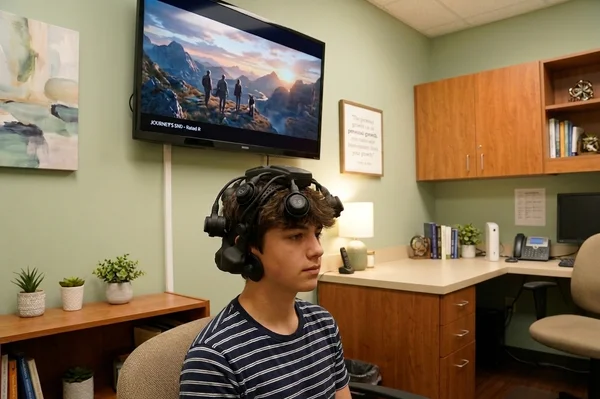
How Neurofeedback Helps Anxiety and Depression
Discover how QEEG brain mapping and BCIA-certified neurofeedback retrain brain patterns for lasting relief from anxiety and depression in Edmond, OK.
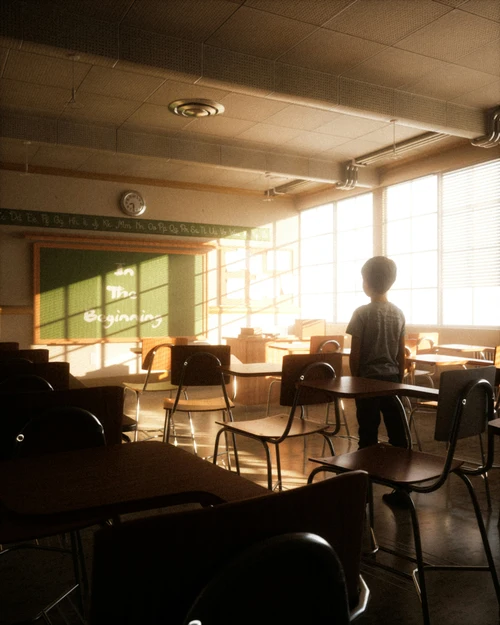
Anxiety and School Avoidance: When to Push or Pull Back
Anxiety-driven school avoidance can make every morning feel like a crisis, leaving parents unsure whether to push their teenager to attend or allow them to stay home. This comprehensive guide explores the causes of emotionally-based school avoidance, provides a framework for deciding when to push or pull back, and explains how CBT helps teens build the confidence to face school anxiety.

My Son Is Great at Video Games but Stinks at School: What’s Really Going On
A teen who’s great at video games and struggling at school usually isn’t lazy — his brain has found one place that rewards it the way it needs, and school hasn’t caught up yet. Neurofeedback and a QEEG brain map can identify what’s actually going on and build a plan that works with his attention system instead of against it.