
How Neurofeedback Helps Anxiety and Depression
Anxiety and depression rarely show up as one clean symptom. For a lot of the people I see in my Edmond office, it's a mix: racing thoughts at night, trouble concentrating during the day, a low mood that won't lift even when life looks fine on paper. Talk therapy helps people understand these patterns. Neurofeedback works underneath them, retraining the brain activity that's driving the symptoms in the first place.At England Therapy, we provide individualized QEEG brain mapping and neurofeedback in our Edmond, OK office, serving teens, young adults, and adults across the greater Oklahoma City metro area.
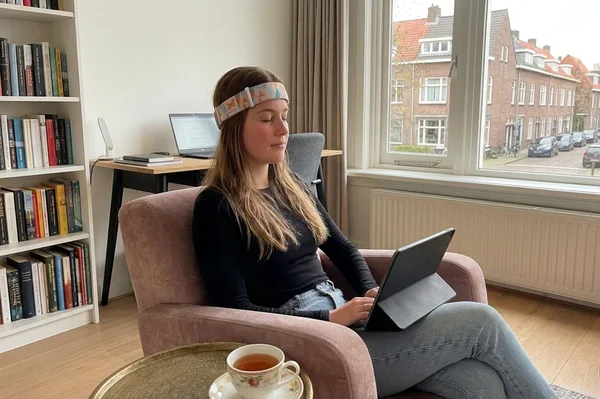
I have clients who tried medication, talk therapy, and are willing to try something new. Some of them still work with a talk therapist alongside neurofeedback. Others have moved past that stage and want a more direct, brain-based approach. Both paths work, and which one fits depends on where you are right now, not on some fixed rule about how treatment has to go.
What Neurofeedback Actually Does
Neurofeedback starts with a QEEG, a quantitative EEG brain map that records electrical activity from sites across the scalp and compares it to a normative database. That map tells me which frequencies are elevated or suppressed, and where, instead of leaving me to guess based on symptoms alone.
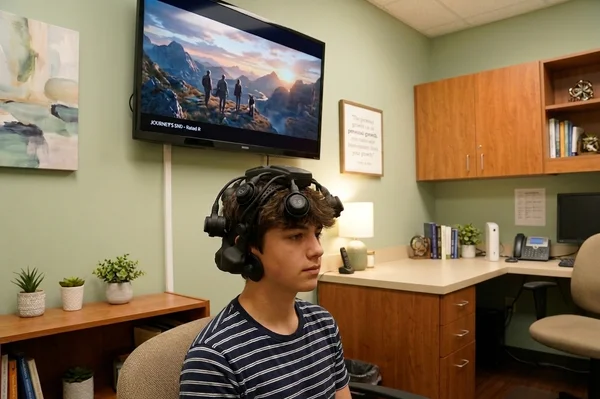
From there, training sessions use real-time feedback, usually a video or sound, that responds to your brainwave activity as it happens. Your brain produces the pattern we're training toward, and the feedback rewards it: the video plays clearly, the sound stays pleasant. Your brain drifts back into the old pattern, and the feedback shifts too. Session after session, the brain spends more time in the healthier state. It works the same way a muscle strengthens with repeated use, built on neuroplasticity, the brain's own capacity to reorganize itself through training.
I'm BCIA-certified in neurofeedback, so protocol design and progress monitoring follow professional certification standards, not generic wellness claims. Every protocol I build comes from a client's own QEEG results. Nobody gets a template that was written for someone else.
Anxiety and Depression Look Different on the Brain
A QEEG shows where the dysregulation lives, not just that it exists. Anxiety and depression tend to show up in different regions and different frequency bands. That's part of why treating them well takes more than one generic protocol.
Anxiety and Posterior Fast-Wave Activity
Anxious brains often run fast in the posterior regions, the back of the head, where sensory processing and internal alerting happen. A QEEG frequently shows excess fast-wave activity here: elevated beta, sometimes paired with reduced alpha. Functionally, this looks like a brain stuck scanning for threat even when nothing threatening is happening. Hypervigilance. Trouble settling down at night. A nervous system that stays activated long after the stressor has passed.
Neurofeedback for anxiety trains that posterior fast-wave pattern down and builds the brain's capacity to shift into calmer states on its own. It trains toward a calmer baseline from the start, instead of handing you coping skills to deploy after the anxiety has already flooded your system. For the teens and young adults I work with here in Edmond, that's often the gap between white-knuckling through school and actually feeling settled enough to function.
Depression and Posterior Slow-Wave Activity
Depression shows a different signature: excess slow-wave activity, elevated theta and delta, in those same posterior regions. Where an anxious brain looks overactivated, a depressed brain often looks underactivated and sluggish, running low on the energy motivation and initiation require. This is why depression can feel less like sadness and more like fog, a heaviness that makes small tasks feel disproportionately hard.
Neurofeedback for depression targets that posterior slow-wave pattern and trains the brain to build activity back up. Clients sometimes notice they feel less foggy or more able to start tasks before their mood has actually lifted. The training addresses the brainwave pattern directly. Mood tends to follow.
I don't run neurofeedback as one generic protocol for exactly this reason. Training a posterior fast-wave anxiety pattern looks nothing like training a posterior slow-wave depression pattern, even though both can show up in the same person at the same time. The QEEG tells us which pattern, or which combination, we're actually working with.
Neurofeedback as a Standalone Treatment
A lot of people assume neurofeedback only works as an add-on to talk therapy. It doesn't have to be. For clients already in talk therapy who want another layer of support, pairing the two makes sense; the brain training and the cognitive work reinforce each other. But neurofeedback can also stand on its own, especially for people who:
- Have tried talk therapy and still feel like something physiological was left unaddressed
- Want a direct, brain-based approach and aren't looking to process specific events verbally right now
- Struggle to put what they're feeling into words, which can slow traditional talk therapy down
- Want to address the nervous system pattern first and decide later whether they want more support
Weekly talk therapy isn't a prerequisite for neurofeedback to work. The training retrains brain activity directly, so it doesn't depend on insight, verbal processing, or being able to fully explain what's going on. That makes it useful for people who understand their anxiety or depression intellectually but haven't been able to shift it.
In-Office and At-Home Training Options
We have options to do brain training in office and at home. Depending on your situation, both can be great options. In-office sessions give me direct oversight of every session and let us adjust the protocol in real time based on what the equipment shows. At-home training extends that work between visits, which matters for people juggling school, jobs, or a schedule that makes weekly office visits hard.
Most clients start with the QEEG brain map in office, since the assessment itself requires the equipment and setup only available here. From there, we build a plan around what actually fits your week, not around what's convenient for the practice.
What a Typical Course of Treatment Looks Like
- Initial QEEG brain map to identify the specific posterior patterns, and any others, driving your symptoms
- A personalized training protocol built from what that map shows, not a generic anxiety or depression package
- Regular sessions, on their own or alongside talk therapy, depending on what you're looking for
- Reassessment as your brain patterns shift, so the protocol adjusts with your progress
Most clients notice changes somewhere between 10 and 20 sessions, though this varies. The initial QEEG gives us a more individualized sense of what to expect based on how pronounced your pattern is. Neurofeedback takes time, but the results will continue way after you've completed training. That's the point of training the brain itself rather than managing symptoms week to week.
Is Neurofeedback Right for You?
Neurofeedback tends to fit people who've tried other approaches and still feel like something's missing, people who want a brain-based approach as their primary treatment, and people already in talk therapy who want another angle of support. It's not a quick fix, and I tell every client that upfront. For the right person, it shifts patterns other approaches haven't touched.
If you're in Edmond and dealing with anxiety that keeps your nervous system stuck in overdrive, or depression that feels more like fog than sadness, this is worth a conversation. It starts the same way for everyone: a QEEG brain map that shows exactly what your brain is doing, so the training that follows is built around your pattern instead of someone else's.
I've written before about how this same QEEG-guided approach applies to focus and concentration in Five Ways Neurofeedback Can Boost Focus for College Students. And if you're a parent trying to understand a teenager stuck in a low, foggy mood, my guide to supporting a depressed teen in Edmond covers the warning signs and how brain-based approaches like neurofeedback fit alongside support at home.
Quick Takeaways
- QEEG brain mapping identifies exactly where and how your brain activity is dysregulated, rather than guessing from symptoms alone.
- Anxiety often shows up as posterior fast-wave activity, a brain stuck scanning for threat.
- Depression often shows up as posterior slow-wave activity, a brain running low on energy for motivation and initiation.
- Neurofeedback can work alongside talk therapy or as a standalone treatment, depending on what fits your situation.
- In-office and at-home training are both available, and the right mix depends on your schedule and needs.
- Results from neurofeedback tend to be lasting, continuing well after training ends, because the training changes the underlying pattern rather than just managing symptoms.
Anxiety and depression each leave a different signature on the brain, and treating them well means training toward the specific pattern driving your symptoms rather than applying one generic approach to everyone. Whether neurofeedback fits alongside your current therapy or stands on its own, the starting point is the same: a clear picture of what your brain is actually doing.
Frequently Asked Questions

Why Men Wait Nearly a Decade to Start Therapy
Men in Edmond, OK often wait nearly a decade to start therapy—trying to handle stress, irritability, and burnout alone. Learn why putting off care costs your marriage and health, and how practical, couch-free CBT therapy helps.

Teen Therapy Edmond OK: Your Teen’s First 3 Sessions
This post walks Edmond parents through the first three sessions of teen therapy with me. Session one sets goals with parents and teen, session two starts CBT with awareness, and session three moves into behavior change, with confidentiality and at-home support covered along the way.

Counseling for Men in Oklahoma: Better Dad, Husband, You
Licensed therapist Jerred England offers direct, action-oriented counseling for men in Edmond, OK, designed to help you become a better dad, husband, and leader. Build practical CBT and ACT tools to manage stress, improve communication, and break negative patterns in-person or online.