
The Irritability Dads Bring Home: When Anger Shows Up First at the Dinner Table
You walk in the door and the house is loud. A backpack sits in the hallway. Dinner is late, the kids are arguing, or your spouse asks a simple question about tomorrow's schedule. Within a minute, your jaw tightens and your voice picks up an edge you did not plan on.
Nobody at the table did anything big. You know that. Later, when the kitchen goes quiet, you feel the gap between what happened and how you reacted.
If that sounds familiar, you are not a bad dad. You are a tired, stressed, or overloaded one, and the dinner table is where it shows. As a licensed marriage and family therapist in Edmond, I sit with men in this spot regularly. The anger they describe has little to do with the dishes or the noise. It lands at home because home is where the day finally catches up with them.

Why Anger Shows Up at the Dinner Table First
Think about what your day asks of you. At work you hold it together. You answer the email politely, sit through the meeting, and keep your tone level with a boss or a client. You do that for eight, nine, ten hours.
Then you walk through your own front door and the pressure drops. Your guard comes down, and whatever you stored up comes out on the people who feel safest.
Dinner adds three more pressures:
- It is a transition point. You move from work mode to family mode in about thirty seconds, with no buffer.
- Everyone needs something at once. Kids want attention, your spouse wants to talk, and you want quiet.
- You are hungry and depleted. Low blood sugar, poor sleep, and a long day shorten your fuse.
None of this excuses snapping at your family. It does explain why the pattern repeats at the same hour, in the same room, night after night.
Irritability Can Cover Something Else
Many men tell me they are "not angry, just short-tempered." Irritability and anger sit close together, and both can sit on top of other problems:
- Chronic stress. Money, job pressure, and a full calendar keep your body on alert.
- Poor sleep. A tired brain reacts faster and recovers slower.
- Low mood or depression. In men, depression frequently looks like a short temper, withdrawal, and lost patience.
- Anxiety. Worry about work, your kids, or your marriage can make a small problem feel urgent.
- Unspoken disappointment. You expected your evenings or your family life to look different, and you have never said so out loud.
If you feel flat, tired, or on edge most days, the irritability may be pointing to your overall load. A good assessment looks at the whole picture before it looks at your temper.
What Your Kids and Spouse Take In
Kids read the mood of a room fast. When Dad comes home tense, children learn to scan the door for his mood. Some go quiet. Some get louder. Teens pull away and stay in their rooms.
Your spouse feels it too. She or he may start tiptoeing around you, or start bracing for dinner before you get home. Over time, that distance turns into the argument you keep having without saying it.
I see the effect most in teens. A teenage boy who watches his dad handle frustration with a raised voice will copy it or shut down to avoid it. I wrote about that pattern in my post on anger counseling for teen boys and young men, and the same principle runs the other direction. When a dad changes how he handles stress, the whole house adjusts.
A Quick Self-Check Before You Change Anything
Start by noticing the pattern. Ask yourself:
- What time of day does the irritability peak?
- What happened in the hour before I walked in?
- How did I sleep, and when did I last eat?
- What do I feel in my body when it starts (tight chest, clenched jaw, heat in my face)?
- What do I do right after (leave the room, raise my voice, go silent)?
In my office, awareness is always step one. You cannot change a reaction you only notice after it ends.
Practical Steps Dads Can Start This Week
You do not need a perfect plan. A few small changes give you more room before you react.
Build a Buffer Between Work and Home
I often suggest that men need a buffer of 20 minutes between work and home. This can be a drive home after work, or just a short break to recalibrate once you arrive home. It's important to remember that your family is the most excited people to see you all day, even if they don't always show it.
Eat Before Dinner
A snack on the way home takes thirty seconds, and it changes how fast small things set you off.
Name It Early
Tell your family, "I had a rough day and I need ten minutes." A direct request lands better than a sharp tone, and your kids see a grown man say what he needs.
Catch the First Signal
Your body warns you before your mouth does. When your jaw tightens, pause and slow your breathing. Ten seconds can keep a comment from turning into a fight.
Repair After a Blow-Up
If you lose your temper, go back. Tell your kids or your spouse, "I raised my voice, and that was on me." Learn to apologize also models what you want your children to do when they mess up.

How Counseling Helps Men With Anger and Irritability
When a man comes to see me for anger, I do not hand him a worksheet and send him home. We look at where the irritability comes from, how it shows up, and what it costs him.
Cognitive Behavioral Therapy (CBT)
CBT helps you catch the thought that fuels the reaction. "They never listen to me" and "nothing I do matters here" raise your temper fast. You learn to spot those thoughts and test them before you act on them.
Acceptance and Commitment Therapy (ACT)
ACT helps you decide what kind of father and spouse you want to be, then act on those values while you still feel frustrated. You learn to feel the heat without letting it drive.
Brain-Based Tools When They Fit
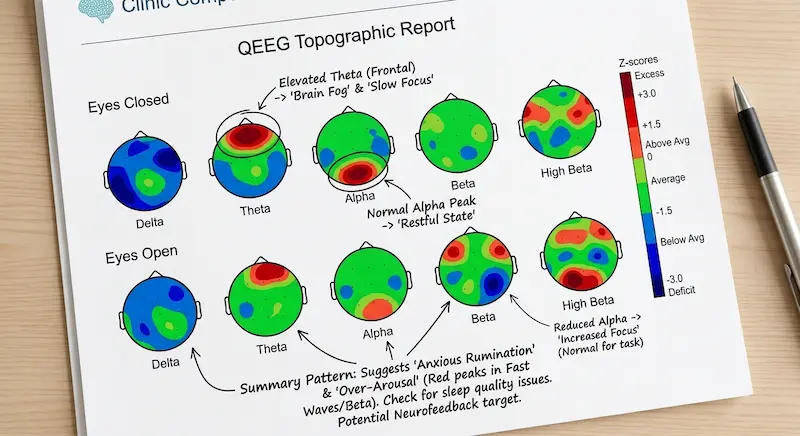
If I suspect something deeper, such as a chronic stress pattern or trouble settling down, I can use a QEEG brain map to see how your brain is working. When it fits, neurofeedback trains your brain toward calmer, steadier patterns. Not every man needs this, and we decide together.
Sessions move fast and focus on progress. Many men expect a couch and a long talk about childhood. You get a plan, tools you can use at dinner tonight, and a place to say what you have not said anywhere else.
When to Get Help Sooner
Reach out soon if any of these are true:
- Your family is afraid of your reaction.
- Your anger has led to throwing things, hitting a wall, or threatening someone.
- You drink more to settle down at night.
- You feel hopeless, or you have thoughts of hurting yourself. If you are in crisis, call or text 988 right away.
- Your spouse has asked you more than once to get help.
Waiting makes the pattern harder to break. Most men who come to my office say they wish they had started sooner.
Quick Takeaways
- Irritability at home is common and often traces back to stress, poor sleep, or low mood.
- The work-to-home transition is the highest-risk moment, so build a 20-minute buffer.
- Awareness comes first. Track the time, the trigger, and the signal in your body.
- Repair matters. Apologizing after a blow-up shows your kids how to handle their own mistakes.
- CBT and ACT give you tools you can use the same night.
- Seek help sooner if your family feels afraid, or if drinking or hopeless thoughts are part of the picture.
Counseling for Dads in Edmond
I am a licensed marriage and family therapist in Edmond with about two decades of experience working with teens, men, and young adults. My office is close to downtown Edmond. I offer sessions in person and online, and I accept HealthChoice.
If the dinner table has become the hardest hour of your day, you do not have to sort it out alone.
Ready to change how you come home? Call or book online at England Therapy and take the first step this week.
Frequently Asked Questions
It is common. Many dads hold it together all day and release the pressure at home. Common does not mean it has to stay that way, and counseling can help you change it.
Irritability can come from stress, poor sleep, anxiety, or depression. An assessment looks at all of these before choosing a plan, so you work on the real cause.
Kids pick up on tension fast, and teens copy or avoid a parent's reaction. The changes you make now show up in the house fast, too.
We talk about what is going on, when it shows up, and what you want to change. You leave with a starting point and a few tools to try.
Yes. I see men in person at my Edmond office and online.
The Irritability Dads Bring Home: When Anger Shows Up First at the Dinner Table
Many dads carry the stress of the workday through the front door, and the dinner table is where that irritability shows up first. This post explains why it happens, what it does to kids and spouses, and how a 20-minute buffer, honest repair, and CBT and ACT counseling in Edmond can help dads change the pattern.

When you Teen Flat-Out Refuses to Go to Therapy
Your teen refuses therapy. What to do: ask what worries them, offer choices, and try a one-session experiment. Advice from an Edmond, OK teen therapist.
What a QEEG Brain Map Actually Shows (and What it Doesn’t)
A QEEG brain map in Edmond, OK shows how your brainwaves compare to others your age. Learn what it reveals, what it can’t, and how to prepare.