
Teen Screen Time and Sleep: What to Do When Taking the Phone Doesn't Work
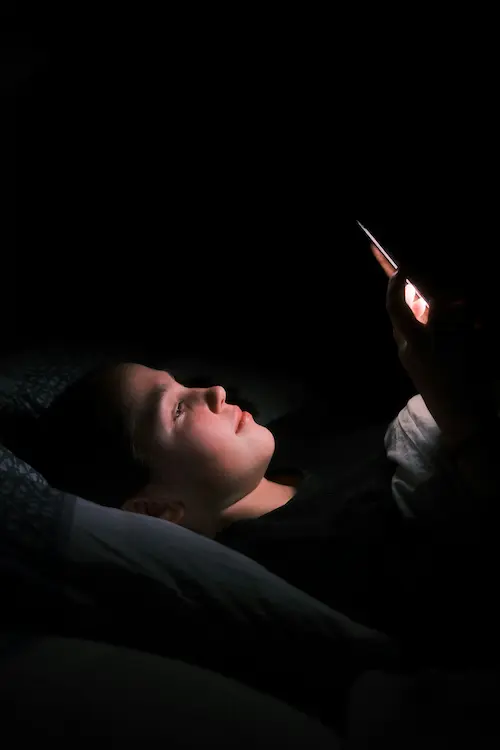
You took the phone at 9:30. By 10:15 your teen was arguing, by 11:00 they were sulking, and by midnight they were awake anyway, staring at the ceiling or hunting for a tablet you forgot about. Now you're exhausted, they're exhausted, and nothing has changed.
If that sounds familiar, you haven't failed. In my Edmond office I see this pattern often with teens. Parents treat the phone as the cause, and the sleep problem turns out to be bigger than the phone. Taking it away handles one piece and leaves the rest alone. This post covers why confiscation backfires, what drives teen sleep problems underneath, and a CBT-based approach that works with your teen instead of against them.
Quick Takeaways
- Taking the phone treats one symptom. Many teens with sleep trouble also have a late body clock, worry at bedtime, or an irregular schedule.
- Teen biology runs late. Puberty shifts the sleep window later, and Edmond school start times begin at 7:35 and 8:10 a.m.
- CBT-I works on the habits and thoughts that keep sleep broken. Research supports it for adolescents when the plan fits the teen.
- A plan your teen helps write lasts longer than a rule they spend the night working around.
- Trying harder to sleep backfires. Bedtime worry feeds insomnia.
Why Taking the Phone Fails for So Many Teen Sleep Problems
The phone does a job
For a teen, the phone carries friendships, social standing, homework, music, and the way they wind down. For an anxious teen, it also drowns out the thoughts that show up when the house goes quiet. Remove it without replacing any of those functions and the thoughts get louder.
The fight wakes everyone up
A conflict at 10 p.m. raises heart rate and stress for the teen and for you. Nobody argues their way into a calm bedtime.
Confiscation teaches sneaking
A teen who loses the phone every night learns to hide a second device, wait until you fall asleep, or borrow the family computer. The screen use goes underground, and now you have a trust problem on top of a sleep problem.
It raises the stakes around sleep
When a teen already believes they can't sleep and the phone becomes the battleground, bedtime starts to feel like a test they're failing. That pressure disrupts sleep by itself.
Screens still matter. A 2016 meta-analysis in JAMA Pediatrics of 20 studies and more than 125,000 young people found that bedtime device use went along with too little sleep, poorer sleep quality, and daytime sleepiness. Teens who kept a device in the room without using it showed a similar pattern. The studies were observational, so they show a link and cannot prove the device caused the problem. That finding gives you a reason to talk about where the phone charges. It does not tell you that removing the phone will fix sleep on its own.
What Is Really Behind Teen Sleep Problems
The teen body clock runs late
During puberty, the internal clock moves later. The American Academy of Pediatrics reports that adolescent sleep-wake cycles can begin shifting up to two hours later, and it recommends that middle and high schools start no earlier than 8:30 a.m. so teens can get 8.5 to 9.5 hours of sleep (Sleep Review summary of the AAP policy).
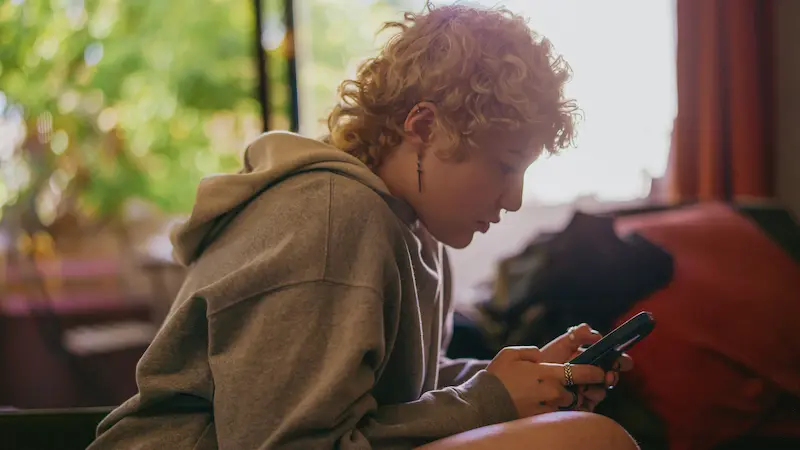
Here is how that plays out locally. Edmond Public Schools like Sequoyah and Central start at 7:35 a.m. Edmond North, Memorial, and Santa Fe start at 8:10 a.m. if your teen attends first hour. Both start times require getting up even earlier to get ready and get to school. Our culture makes it really difficult for students, who tend to like to stay up, to get enough sleep. Most students have to be in bed by 10 p.m., and athletes or band students may need to get to bed even earlier since they have practice before school.
Run the numbers. Say your teen wakes at 6:30. A teen who needs 8.5 to 9.5 hours has to be asleep between 9 and 10 p.m., and a body clock that doesn't produce sleepiness until 11 won't cooperate. Many teens spend the school week in a sleep deficit before the phone enters the picture.
Irregular schedules make it worse
A teen who sleeps until noon on Saturday and Sunday, then tries to fall asleep at 10 p.m. on Sunday, has given themselves jet lag every week.
Anxiety and sleep feed each other
Anxious teens often lie awake running through tomorrow. Then a bad night makes the next day's anxiety worse. If your teen's sleep trouble began alongside school stress or social worry, the phone may be a coping tool more than a cause. My post on anxiety and school avoidance covers that overlap.
Caffeine and late light add up
Energy drinks, afternoon soda, and bright screens close to bedtime all push the same direction.
Once you see these pieces, the question changes. Instead of "why won't you put the phone down?" you can ask "what is getting in the way of sleep, and what can we change together?"
Why CBT-I Fits Teens
CBT-I, cognitive behavioral therapy for insomnia, is the first-line treatment for insomnia in adults, and the adolescent research is encouraging. A 2024 meta-analysis of 8 randomized trials with 599 participants found improvements in insomnia symptoms, time to fall asleep, total sleep time, and sleep efficiency after CBT-I (Frontiers in Public Health). An earlier review of children and adolescents found clearer gains in how quickly teens fell asleep and how efficiently they slept than in total sleep time (Brazilian Journal of Medical and Biological Research). The research is still growing, and results vary by outcome, but CBT-I gives teens tools that don't depend on willpower or on removing a device.
Stimulus control: make the bed mean sleep
A teen who scrolls, studies, texts, and worries in bed teaches their brain that bed is a place to be alert. Stimulus control rebuilds the link between bed and sleep:
- Use the bed for sleep only. Homework and gaming happen somewhere else.
- After a long stretch awake and frustrated, get up, do something quiet and dull in low light, and return when sleepy.
- Keep the wake-up time steady, weekends included, within about an hour.
That last rule does more work than most parents expect.
A consistent sleep window
Adult CBT-I often uses strict sleep restriction. I skip anything aggressive with teens, who already run short on sleep. The adapted version builds a realistic window around a steady wake time and adjusts it based on what the sleep diary shows. The goal is a steady rhythm, with no deprivation.
The sleep diary: let the data talk
Have your teen track bedtime, the time they fell asleep, night wakings, wake time, and how they felt the next day for two weeks. Teens respond to their own numbers better than to a parent's opinion. A diary often reveals what nobody guessed, like a Sunday-night problem that started with a Saturday sleep-in.
Cognitive work: take the pressure off sleep
Many teens with insomnia carry beliefs like "if I don't sleep I'll fail my test" or "something is wrong with me." Those thoughts raise arousal, and arousal blocks sleep. In sessions we practice noticing the thought, checking whether it holds up, and swapping in something workable, like "one rough night is manageable." For anxious teens, a short worry-time window earlier in the evening keeps the worries from arriving at 11 p.m.
Ten Ideas to Try Instead of (or Alongside) Confiscation
Pick the ones that fit your teen. You don't need all ten.
- Negotiate a charging spot. A phone that charges outside the bedroom works better as a household agreement that includes your phone. Teens notice when the rule applies to everyone.
- Set a screens-down time before lights out. Aim for 30 to 60 minutes. Give it a purpose: a shower, music, reading, drawing, stretching, a snack.
- Replace what the phone was doing. Buy an alarm clock if the phone is the alarm. Set up a speaker if it's the music. Give your teen a set time to say goodnight to friends if it's social connection.
- Ask what they actually do on it at night. A group chat that is stirring up conflict affects sleep differently from a familiar show or a calm playlist.
- Use morning light. Bright light soon after waking, even a few minutes by a window or a short walk, helps anchor a body clock that wants to drift late.
- Cap the weekend drift. Set a ceiling of about an hour past the weekday wake time, and allow a short afternoon nap if needed.
- Check the caffeine. Ask about energy drinks, coffee, and afternoon soda. This is a quick win for many families.
- Offer an experiment. I pitch changes to teens as a two-week trial: "Let's try this and see what the sleep diary says." Teens push back on rules and often agree to experiments.
- Pair the rule with a tool for racing thoughts. A notebook by the bed, slow breathing, or a short journal entry before lights out gives an anxious mind something to do.
- Model it. Teens notice when parents scroll in bed. This is about the house having one set of rules, not about guilt.
When It's More Than a Habit
Some sleep problems need more than a better routine. Consider getting help if your teen:
- Has struggled to fall or stay asleep for a month or more
- Seems anxious, down, or irritable most days, not only when tired
- Falls asleep in class or watches grades slip
- Panics when the phone is out of reach
- Snores loudly, gasps, or wakes unrefreshed after plenty of hours in bed
Loud snoring and gasping point toward a medical cause, so start with your pediatrician. If low mood drives the sleep trouble, my teen depression guide for parents may help you sort out what you're seeing.
If it looks like anxiety, mood, or a habit loop that won't budge, I work on that with teens in Edmond and online using CBT. My office is close to Sequoyah Middle School, Edmond North High School, and UCO, which makes after-school sessions easier for local families. I've worked with teens for about two decades, and the plan sticks best when the teen helps build it. If you're curious what starting looks like, I wrote about your teen's first three sessions.
Conclusion
Taking the phone can feel like the obvious fix, and a boundary is sometimes the right call. When it isn't working, that tells you the problem has more parts than the phone: a late body clock, early school bells, an uneven weekend schedule, worry at night, and a device that meets real needs. CBT-I gives you a way to address all of them without a nightly fight. Start small, bring your teen into the planning, and let a two-week sleep diary show you where to focus.
Ready to Talk It Through?
If your teen's sleep has been off for weeks and the phone battle isn't solving it, I'd be glad to help. I see teens in person in Edmond and online, and I accept HealthChoice. Reach out at englandtherapy.com with any questions about getting started.
Frequently Asked Questions
Sources
- Carter B, Rees P, Hale L, et al. Association Between Portable Screen-Based Media Device Access or Use and Sleep Outcomes: A Systematic Review and Meta-analysis. JAMA Pediatrics, 2016. Cardiff University summary
- American Academy of Pediatrics, School Start Times for Adolescents policy statement, 2014. Sleep Review summary
- Mei Z, et al. The efficacy of cognitive behavioral therapy for insomnia in adolescents: a systematic review and meta-analysis of randomized controlled trials. Frontiers in Public Health, 2024. Full text
- Ma Z-R, Shi L-J, Deng M-H. Efficacy of cognitive behavioral therapy in children and adolescents with insomnia: a systematic review and meta-analysis. Brazilian Journal of Medical and Biological Research, 2018. Full text

Teen Screen Time and Sleep: What to Do when Taking the Phone Doesn’t Work
Taking your teen’s phone isn’t fixing their sleep. Learn why teen sleep problems run deeper than screens and how CBT-I helps.

The Irritability Dads Bring Home: When Anger Shows Up First at the Dinner Table
Many dads carry the stress of the workday through the front door, and the dinner table is where that irritability shows up first. This post explains why it happens, what it does to kids and spouses, and how a 20-minute buffer, honest repair, and CBT and ACT counseling in Edmond can help dads change the pattern.

When you Teen Flat-Out Refuses to Go to Therapy
Your teen refuses therapy. What to do: ask what worries them, offer choices, and try a one-session experiment. Advice from an Edmond, OK teen therapist.