
Back to School Organization for Teens with ADHD
Every August I watch the same scene play out in the families I work with. A teen who is smart and capable spends the first weeks of school buried under logistics. Backpacks turn into black holes. Papers due yesterday surface three weeks later, crumpled at the bottom of a folder. Parents ask the same question with the same tired frustration: why can't you just remember? The real answer is that organization for teens with ADHD isn't a willpower problem. It's a skills and systems problem. Executive function, the brain's project management system, is exactly where ADHD hits hardest, and no amount of nagging fixes a system that was never built for how that brain works. This article walks through a simple four-pocket system I hand out every summer in my ADHD program, plus a handful of other hacks that help teens keep up with the school year instead of white-knuckling through it.
Why Traditional Organization Systems Fail Teens with ADHD
Most school organization advice gets written for neurotypical brains, then handed to ADHD teens as if it should work the same way. It doesn't.
The Executive Function Gap
Executive function covers planning, prioritizing, working memory, and follow-through: the mental skills that let someone look at a pile of homework and know what to do first. ADHD affects the frontal lobe processes tied to these skills, which is why a teen can care about getting things done and still lose track of a due date within hours of hearing it. That's not a character flaw. That's a wiring difference, and the fix is external structure, not internal guilt.
Why "Just Try Harder" Doesn't Work
A three-ring binder with twelve tabbed sections looks organized on paper. In practice, it asks an ADHD brain to make a decision every time a paper needs to be filed: which tab does this go in? Decision fatigue wins almost every time, and that's how papers end up stuffed loose in a backpack instead. I remember this from my own school days: as a teen, I didn't want to carry a large trapper keeper to class, and I definitely didn't want seven 1-inch binders taking up my whole locker. The fewer decisions a system requires in the moment, the more likely a teen sticks with it.
The Four-Pocket System: A Simple Structure That Sticks
Instead of a system with too many choices, I hand every teen in my summer ADHD group a nine-pocket expanding file folder, and we set up just four working pockets together. Four categories is small enough to hold in working memory and specific enough that there's almost never a question about where something goes.
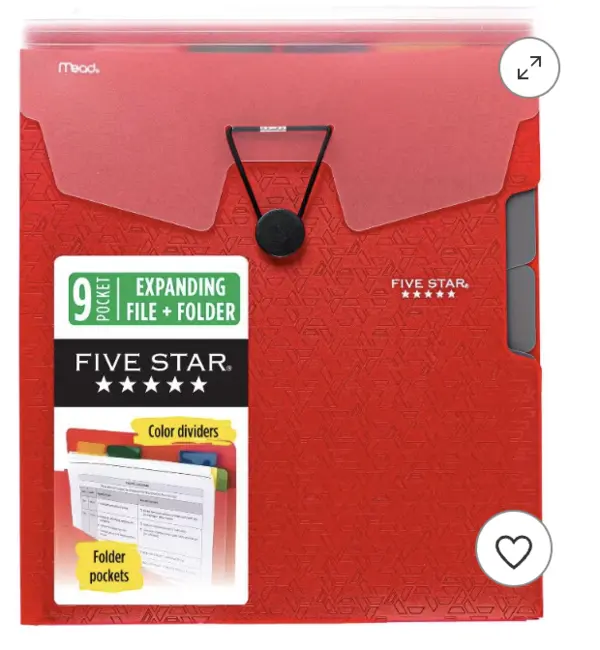
The four-pocket setup, built from a standard nine-pocket expanding folder.
Tackle Later — Giving Delayed Tasks a Home
This pocket holds anything with a future due date: a project outline handed out today for something due in three weeks, a permission slip for an event next month. Without a dedicated spot, these papers get lost or trigger an anxious "I have to deal with this right now" reaction. One specific home lowers the stress of holding onto them and makes weekly planning easier, since a teen or parent can flip to one pocket and see everything on the horizon at once.
Turn In — Removing the Guesswork
Every completed assignment goes straight into this pocket the moment it's finished, not into a backpack pouch or a random notebook. The point isn't neatness for its own sake. It's removing the moment of hesitation where a teen has to decide where a finished paper belongs. One pocket, one rule: if it's done, it goes here until it's handed to the teacher.
Homework — One Spot, Every Subject
This is the active, in-progress pocket. Assignments that still need work live here regardless of subject. Subject-specific folders sound organized but multiply the number of places a paper could be, which creates exactly the kind of friction that causes assignments to go missing. One pocket for "still needs to be done" keeps the whole system fast.
Needed for Reference — Keeping Papers Teens Actually Need
Study guides, rubrics, syllabi, and anything a teen needs to look back at, but doesn't need to turn in or actively work on, belongs here. This keeps reference material from cluttering the working pockets while staying easy to find at study time.
Setting Up the System at Home
A folder only works if it has a consistent place to live and a consistent moment when it gets used. Both matter more than the folder itself.
Where the Folder Lives
Pick one landing spot near the door, the kitchen table, or wherever the backpack already gets dropped. Giving each item a consistent "home" reduces morning searches and forgotten belongings. The folder should never be something a teen has to hunt for. If it isn't visible and in the path of their normal routine, it won't get used no matter how good the system is.
The Nightly Two-Minute Sort
Before bed, everything from the backpack gets sorted into its pocket: finished work into Turn In, unfinished work into Homework, anything for later into Tackle Later. This takes less time than most families expect once it becomes a habit, and it means mornings start with a backpack that's already ready instead of a scramble to find last night's math sheet.
Every School Handles This a Little Differently
One thing worth planning for: not every classroom runs organization the same way, and a teen's system has to flex around that reality. In my experience, smaller schools around Edmond, like OCS, OCA, and Crossings, tend to have teachers who want students organizing to their own preference, while larger schools like Edmond North, Memorial, and Santa Fe tend to give students more leeway. At the end of the day, you sometimes have to make your way work, and the teacher's way, too. The four-pocket folder can live inside a teacher's required system rather than replace it. If a teacher wants a subject-specific binder for their class, the folder still works as the home base everything passes through before it gets filed into that binder. Teens with ADHD do best when they aren't asked to run two competing systems in their head at once.
Color-Coding and Labeling Hacks for ADHD Brains
Color is a fast, low-effort way to reduce the mental load of sorting. Assigning one color to each subject and using it consistently across folders, notebooks, and labels lets a teen recognize what they need at a glance instead of reading every label. It's a small hack, but it removes a decision point every time a teen reaches for a notebook, and that adds up over a full school year.

Small, low-effort hacks that reduce decision fatigue during the school day.
Digital Tools That Complement (Not Replace) Physical Systems
Physical systems handle the "what do I have and where does it go" problem well, but due dates and long-term deadlines often need a second layer. A single shared digital calendar, one that both the teen and a parent can see, catches things a folder can't, like an assignment logged in an online portal that was never handed out on paper. The goal isn't replacing the folder with an app. It's letting each tool do the job it's actually good at: a physical system handles physical papers, and a calendar handles time.
Building a Homework Hotspot
A consistent, distraction-free workspace matters as much as the paperwork system. It doesn't need to be elaborate: a desk, good lighting, and supplies that stay in the same place is enough. A shower caddy stocked with pencils, pens, a calculator, and other essentials keeps everything in one place and makes it easy to transport wherever needed. Homework in bed should be avoided, since the bed should stay reserved for sleep.

A simple, distraction-free homework hotspot beats an elaborate setup nobody maintains.
The Sunday Reset Routine
A short weekly reset prevents small pileups from turning into a Sunday-night crisis. Fifteen minutes to clean out the backpack, restock supplies, and check the Tackle Later pocket keeps the whole system from drifting. This is also the moment to log any major tests or projects onto the shared calendar for the week ahead, so nothing gets tracked from memory alone.
Backpack and Locker Organization Hacks
A few small habits go a long way here. Assign specific compartments for specific categories, the folder in one pocket, loose supplies in another, so there's never a decision to make about where something goes. At school, the same logic applies to lockers: one shelf or bin per category rather than a single pile. The fewer categories a teen has to sort into, the more likely the system survives a rushed passing period between classes.
Helping Teens Build Independence Without Micromanaging
The goal of any system like this is for a teen to eventually run it themselves. That means resisting the urge to take over the sorting and instead sitting with them for the first few weeks while they build the habit. Praise the process, not just the outcome. A teen who sorted their folder but still missed one assignment did the hard part right. Letting teens have ownership over their own setup, even if it looks different from how an adult would do it, tends to make a system stick longer than one imposed on them.
When Organization Systems Fall Apart (And How to Restart)
Every system breaks down at some point during the year, usually around a holiday break, a stretch of late nights, or a hard academic stretch. This is normal, and it doesn't mean the system failed. ADHD brains often need novelty to stay motivated, so a system that feels stale after a few months isn't a sign of failure; it's a sign it's time for a small refresh. Swapping in new folder colors, moving the landing spot, or having a short conversation about what's working and what isn't can bring a system back online without starting from scratch.
Quick Takeaways
- A four-pocket system, Tackle Later, Turn In, Homework, and Needed for Reference, cuts down the number of decisions a teen has to make about where a paper belongs.
- Executive function differences, not lack of effort, are the real reason ADHD teens struggle with school organization.
- The folder needs a consistent, visible landing spot to actually get used.
- A nightly two-minute sort keeps the system from falling apart week to week.
- Color-coding by subject cuts down on decision fatigue.
- A shared digital calendar should complement, not replace, the physical folder.
- Systems break down periodically, and a quick refresh usually fixes it, not a full overhaul.
Conclusion
The goal of organization is to build good habits, lower stress, and get better grades. That's the whole point, and it's worth remembering when a system feels imperfect. Getting a teen with ADHD organized for school isn't about finding the one perfect planner or the strictest set of rules. It's about building a system with as few decision points as possible, giving it a consistent place in the daily routine, and expecting small adjustments along the way. The four-pocket folder system is one starting point: simple enough to actually use, structured enough to catch what matters. Every teen's brain works a little differently, so the exact setup that helps one family might need tweaking for another, and that's expected, not a sign something is broken.
If your teen tries this system, watch what sticks and what doesn't after the first few weeks, and adjust from there. Small, consistent structure beats an elaborate system that collapses by October.
FAQs
References
- Child Mind Institute, "School Success Kit for Kids With ADHD"
- CHADD, "A Back-to-School Toolkit for When Kids and Parents Have ADHD"
- ADDitude Magazine, "Organizing Tips for Children with ADHD"
- Pacific MFT Network, "Back-to-School Tips for Children With ADHD"
- Tiimo App, "ADHD Friendly Organization Strategies for Back to School"
- Product referenced: Five Star 9-Pocket Expanding File Folder
Back to School Organization for Teens with ADHD…and those without it.
Teens with ADHD don’t struggle with school organization because they aren’t trying hard enough — they struggle because most systems ask their brains to make too many decisions at once. A simple four-pocket folder, paired with a few low-lift habits like color-coding and a nightly two-minute sort, gives them a structure that actually holds up through the school year.

Teen Anxiety Treatment in Edmond, OK: What Works
Anxiety in teens rarely responds to willpower alone, and in my Edmond practice I treat it with a combination of CBT, ACT, and QEEG-guided neurofeedback tailored to each teen’s brain. This guide covers how each approach works, what the research on neurofeedback shows, and what to expect from intake through ongoing care.

Teen Depression Edmond OK: Parent Support & Therapy Guide
Navigating teen depression in Edmond, OK, can feel incredibly isolating for families, but customized brain-based treatments offer a clear path forward. By integrating supportive home care with advanced therapies like brainspotting and neurofeedback, local teens can release stored emotional stress, find calm, and build lasting resilience.