
Video Therapy for Depression: Support for Men in OK
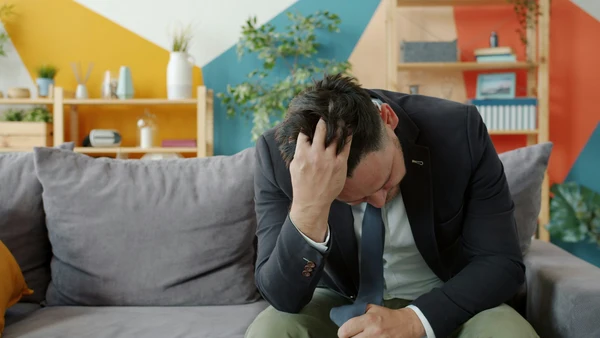
Depression in men rarely looks like the version most people picture. It shows up as irritability, exhaustion, working too much, going quiet, or losing interest in things that used to matter. And even when a man recognizes something is wrong, getting to a therapist's office can feel like one more task he doesn't have room for.
That's where video therapy for depression changes the equation. As a therapist in Edmond, OK who works primarily with men, I've watched online counseling remove the exact barriers that keep guys stuck: the drive across town, the waiting room, the sense that seeking help means rearranging your whole week. A laptop and fifty minutes is often all it takes to start.
This article walks through what video therapy actually involves, what the research says about whether it works as well as sitting across from someone in person, why the format tends to fit the way men actually live, and what a spouse or partner can do to support a man who's considering it. If you're weighing online men's counseling for yourself or for someone you love, here's what you need to know.
Quick Takeaways
- Depression in men often presents as anger, numbness, or overworking rather than visible sadness, which contributes to underdiagnosis.
- Video therapy for depression produces outcomes comparable to in-person sessions for most men, according to multiple clinical research reviews.
- Online men's counseling removes the logistical and privacy barriers that keep many men from starting therapy in the first place.
- CBT and ACT, the two approaches I use most, both translate well to a video format because they're structured and skills-based.
- Your care plan should reflect your specific situation, not a generic template applied to every client.
- Spouses can play a meaningful role in encouraging a man toward therapy without pushing him into defensiveness.
- Choosing between video and in-person sessions is a personal decision, and many of my clients move between both depending on the season of life they're in.
Why Depression Looks Different in Men
Most depression screenings were built around symptoms that show up more visibly in women: sadness, crying, withdrawal. Men experience the same condition. It just doesn't look the same, and that difference has real consequences.
Common Signs That Get Missed
In my sessions with men, the presenting complaint is rarely "I feel depressed." It's more often irritability that's straining a marriage, a short fuse at work, a lost drive in a hobby he used to love, or a vague sense of being "off" without being able to name why. Men with depressive symptoms frequently mask difficult emotions through overworking, overexercising, or emotional shutdown, not through the sadness most people associate with the condition. Because those symptoms don't match the standard clinical picture, the man misses them in himself, and so do the people closest to him.
Why So Few Men Ask for Help
Only about 41.6% of men with a diagnosable mental illness receive any treatment, compared to nearly 57% of women. Men account for roughly 80% of suicide deaths in the U.S., and a majority of those men had no documented mental health diagnosis at the time. Men aren't suffering less. They're conditioned to see asking for help as failure, not a decision. I understand that resistance firsthand, both from years in ministry working alongside men and from being one myself.
What Video Therapy Actually Is
Video therapy, also called teletherapy or online counseling, means meeting with a licensed therapist through a secure video connection instead of an office. The structure of the session doesn't change, only where you're sitting does.
How a Virtual Session Works
You log into a HIPAA-compliant video platform from a laptop, tablet, or phone at your scheduled time. We talk the same way we would in person, working through what's been happening, applying the same CBT or ACT tools I'd use across the desk from you. I don't dilute the clinical process for video. The only difference is that you might be sitting in your home office instead of my office in Edmond.
Video Therapy vs. Phone or Chat-Based Support
Video therapy is a live, face-to-face session with a licensed clinician. That's different from texting a coach or working through a self-guided app, and the difference matters. Seeing facial expressions and tone in real time lets me track how you're actually doing, not just what you're typing. For depression specifically, that face-to-face read is part of how treatment stays responsive to what's happening with you week to week.
Does Video Therapy Work as Well as In-Person Care?
This is usually the first question men ask me, and it's a fair one. Nobody wants to invest time in something that's a watered-down version of the real thing.
What the Research Shows
The research on this has grown over the past several years, and the findings are consistent. A large meta-analysis of randomized controlled trials found that synchronous video-based teletherapy produces treatment outcomes comparable to in-person therapy across a range of conditions, including depression. A separate review focused specifically on depression treatment reached the same conclusion, with symptom reduction holding steady at three- and six-month follow-ups regardless of whether care was delivered online or face-to-face. Some studies have even found higher treatment completion rates with telehealth, likely because it's easier to show up for a session you don't have to drive to.
Where Video Therapy Has Real Advantages for Men
For men specifically, video therapy has a practical edge beyond matching in-person outcomes. It fits into a lunch break. It doesn't require explaining a mid-afternoon disappearance to a coworker. It doesn't mean being seen walking into a building with "counseling" on the door in a town where people notice things like that. For a lot of men, the format itself lowers the emotional cost of getting started.
Why Online Counseling Fits the Way Men Actually Live
Beyond the clinical research, there's a simpler reason online men's counseling has taken off: it works with your schedule instead of against it.
Flexibility Around Work and Family Schedules
Most of the men I work with are juggling a job, a marriage, kids, and whatever's left of a personal life. Video sessions mean you can meet during a lunch hour, before the house wakes up, or after the kids are down, without losing an evening to a commute. For some men, I even do our sessions over the phone during lunch. That flexibility is often the difference between a man starting therapy and a man deciding it's not realistic right now.

Privacy in a Small-Town-Feeling Community
Edmond is a connected community. Even with a private-pay practice and a discreet office, some men would rather not be seen walking into a counselor's building. Video sessions happen wherever you have privacy and a closed door, which for a lot of guys makes the decision to start therapy feel a lot less exposed.
Lower Barrier to Getting Started
Every extra step between deciding you need help and actually getting it is a chance to talk yourself out of it. Video therapy strips out the drive time, the parking, the waiting room. That reduction in friction matters more than people expect, especially for men who are already ambivalent about the idea of therapy in the first place.
My Approach to Video Therapy for Men in Edmond
I built my practice around working with men, and that shapes how I run a video session just as much as an in-person one. I know the pressures of being a man: leading your household, communicating well, and supporting your children.

CBT and ACT: Practical Tools, Not Just Talk
I use Cognitive Behavioral Therapy and Acceptance and Commitment Therapy as my primary tools, and both are naturally suited to a video format. They're structured, skills-based, and built around identifying patterns and practicing new responses, rather than open-ended talk with no clear direction. In a video session, we can walk through a specific situation from your week, map out the thought pattern underneath it, and build a concrete plan for next time. That structure translates well onto a screen because the work itself is practical.
Faith-Integrated Support, If That Matters to You
For men who want it, I can integrate faith into the therapeutic process. That's not part of every session by default. It's something we shape together based on what's meaningful to you, the same way every part of your care plan gets built around your specific situation rather than a fixed program every client goes through.
What a First Video Session With Me Looks Like
The first session is a conversation. We're not running through an evaluation checklist. We talk through what's been going on, what you've already tried, and what you're hoping changes. You'll never lay down on my couch and cry. Instead, we'll evaluate your situation, make a game plan, and execute it. We'll also evaluate results, too. From there we build a plan specific to you. I don't run every client through the same protocol, because the man dealing with a marriage that's gone quiet needs something different than the man who's stopped caring about work he used to love.

A Note for Spouses and Partners
If you're a wife or partner reading this because the man in your life is struggling, you're not powerless here, even if you can't make the decision for him.
How to Encourage Him Without Pushing Him Away
Framing matters more than most people realize. "I think something's wrong with you" tends to trigger defensiveness. "I've noticed you seem worn out lately, and I want you to have support, whatever that looks like" tends to land differently. Bringing up video therapy specifically can help, since it removes his objection about not having time or not wanting to be seen walking into an office.
What Changes You Might Notice
Progress in men's therapy doesn't always look like emotional breakthroughs at the dinner table. More often it shows up as him being less reactive, more present, or able to talk through a disagreement instead of shutting down. Those shifts tend to build gradually rather than all at once, and they're often easier for a partner to notice than the man himself.
In-Person or Online? How to Decide
There's no universal right answer here. The best format depends on your situation.
When Online Makes Sense
If your schedule is tight, if privacy is a concern, or if you're the kind of person who's more comfortable opening up without sitting across a desk from someone, video therapy is often the better starting point.
When In-Person Might Be Better
Some men do better with the structure of physically leaving the house and sitting in an office, especially early on when building the habit of showing up matters as much as the content of the session. I offer both, and we can start with one and shift to the other if your needs change. Your treatment shouldn't be locked into a format that stops working for you.
Getting Started with Video Therapy in Edmond, OK
If you've read this far, some part of you is already considering it. You don't need a diagnosis or a crisis to reach out. A short conversation is enough to figure out whether video therapy is the right fit for what you're dealing with, and what a plan built around your specific situation would look like.
Frequently Asked Questions
If this article named something you've been feeling but hadn't put words to, I'd love to hear about it. What's held you back from trying therapy, video or otherwise? Drop a comment or share this with a man in your life who might need to see it. Sometimes one guy reaching out is what gets another guy to finally do the same.
Ready to talk? Schedule a free 15-minute consultation or learn more about counseling for men in Edmond. I also work with anxiety and depression more broadly if that's a better starting point for you.
References
- National Institute of Mental Health. "Major Depression." NIMH Statistics.
- Anxiety and Depression Association of America. "Men's Mental Health Resources." adaa.org.
- Lin, T., Heckman, T.G., & Anderson, T. (2022). "The Efficacy of Synchronous Teletherapy Versus In-Person Therapy: A Meta-Analysis of Randomized Clinical Trials." Clinical Psychology: Science and Practice. View study.
- Giovanetti, A.K., Punt, S.E.W., Nelson, E.L., & Ilardi, S.S. (2022). "Teletherapy Versus In-Person Psychotherapy for Depression: A Meta-Analysis of Randomized Controlled Trials." Telemedicine and e-Health. View study.
- Centers for Disease Control and Prevention. Suicide mortality data, referenced via Men's Mental Health Hotline resource summary.

Teen Therapy Edmond OK: Your Teen’s First 3 Sessions
This post walks Edmond parents through the first three sessions of teen therapy with me. Session one sets goals with parents and teen, session two starts CBT with awareness, and session three moves into behavior change, with confidentiality and at-home support covered along the way.

Counseling for Men in Oklahoma: Better Dad, Husband, You
Licensed therapist Jerred England offers direct, action-oriented counseling for men in Edmond, OK, designed to help you become a better dad, husband, and leader. Build practical CBT and ACT tools to manage stress, improve communication, and break negative patterns in-person or online.
How Neurofeedback Helps Anxiety and Depression
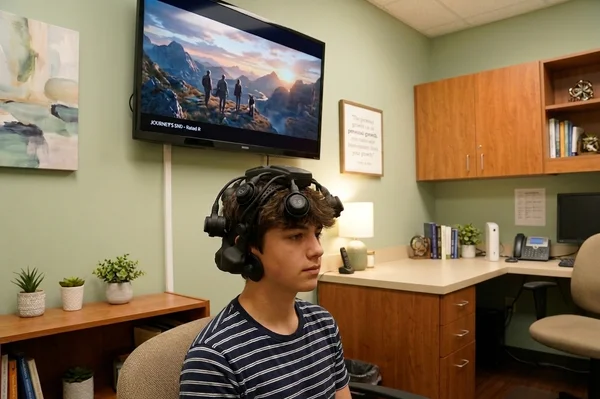
Discover how QEEG brain mapping and BCIA-certified neurofeedback retrain brain patterns for lasting relief from anxiety and depression in Edmond, OK.