
5 Signs Your Son's School Behavior Problems Require Professional Counseling
5 Signs Your Son's School Behavior Problems Require Professional Counseling
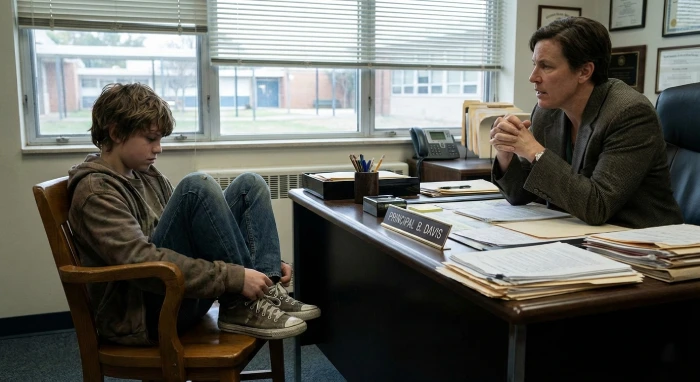
If you've been called into the principal's office more times than you can count, or if your son's teacher sends home notes that leave you equal parts frustrated and heartbroken, you are not alone. Many parents of teen boys in Edmond and across Oklahoma find themselves caught between dismissing school behavior problems as "just a phase" and wondering whether something deeper is going on.
The truth is, not every act of defiance or classroom disruption signals a crisis — but some do. Knowing the difference can change the trajectory of your son's life. This article breaks down the five most telling signs that your son's school behavior problems go beyond typical teenage rebellion, and why professional child behavior counseling may be the most powerful tool in your parenting arsenal right now.
Whether your son is constantly in conflict with teachers, has been suspended, or simply seems angry all the time with no clear reason, these signs are worth understanding. Early, personalized intervention using evidence-based approaches like Cognitive Behavioral Therapy (CBT) and Acceptance and Commitment Therapy (ACT) can turn things around — before the consequences become permanent. If you've been asking yourself, "My son keeps getting in trouble at school — is this something I can just discipline my way through?" this guide is for you.
I work with teen boys in Edmond, Oklahoma in-person and online throughout Oklahoma. I don't have a one-size-fits-all approach — every intake is built around your son's specific situation. If you're not sure whether what you're seeing rises to the level of needing professional support, reach out and we can talk it through.
When multiple signs appear at once, the case for professional counseling becomes significantly stronger. Each sign is covered in detail below.
Sign #1: His School Behavior Problems Are Happening Across Multiple Settings
One classroom conflict might be a personality clash. But when your son is consistently getting in trouble at school, at home, at practice, and with friends — that pattern is a signal worth taking seriously.
Behavior that appears in multiple settings typically points to an underlying emotional or psychological issue rather than a situational reaction. Research published in child development literature consistently shows that oppositional behavior spanning home and school environments is one of the clearest indicators of a need for professional support. This is what clinicians call pervasive oppositional behavior — and it responds very differently to simple discipline than it does to structured, evidence-based therapy.
For teen boys especially, defiant behavior is often a communication tool. When a boy lacks the language or emotional vocabulary to express what he's feeling, he expresses it through action — arguing, shutting down, disrupting class, or refusing to follow instructions. The behavior isn't random. It's a message. The American Psychological Association recognizes that oppositional patterns in adolescents are among the most treatable conditions when addressed early with the right approach.
CBT and ACT, two evidence-based modalities used at England Therapy, are particularly effective for boys who struggle with emotional regulation across multiple environments. The goal isn't to make your son compliant. It's to help him understand what he's feeling and give him tools to express it productively.
"When the behavior shows up everywhere, the environment isn't the problem. The pattern is."
Sign #2: His Academic Performance Has Significantly Declined
There's often a direct connection between emotional distress and academic performance that parents miss — especially with boys, who are less likely to verbalize sadness, anxiety, or overwhelm. Instead of saying "I'm struggling," they disengage. They stop doing homework. They act out in class to avoid the humiliation of not understanding the material.
A sudden or sustained drop in grades — especially when your son was previously performing adequately — is one of the most actionable signs your child needs therapy for behavior. According to the American Psychological Association, untreated emotional and behavioral issues in adolescents are strongly correlated with academic underperformance. The connection runs both ways: emotional distress impairs concentration and memory, while academic failure feeds shame and frustration, which then fuels more school discipline problems in the classroom.
For teen boys, the narrative can become: "School is pointless. Teachers are useless. Why try?" This isn't attitude for attitude's sake — it's a protective mechanism. If he doesn't try, he can't fail. If he disrupts class, no one notices he can't keep up. The CDC's research on children's mental health supports the connection between untreated behavioral issues and long-term academic outcomes.
CBT helps boys identify the thought patterns behind academic avoidance — "I'm stupid," "Everyone will laugh at me" — and replace them with more accurate, productive thinking. ACT helps boys develop psychological flexibility so they can persist even when things feel hard. Learn more about how teen counseling at England Therapy addresses academic struggles.
Also worth reading: Stress vs. Depression in Young Men: A Parent's Guide — a deeper look at how emotional struggles show up differently in boys.
Sign #3: His Defiance Has Escalated to Aggression or Authority Conflicts
Every boy pushes back at some point. It's developmentally normal to test limits, question rules, and have a few confrontations with authority. But there's a meaningful difference between occasional defiance and escalating aggression, threats, or an inability to de-escalate when things don't go his way.
When a teen boy's defiance consistently crosses into verbal aggression, physical altercations, property destruction, or making threats toward teachers or peers, professional support is no longer optional — it's essential. These behaviors don't typically improve on their own without intervention, and the stakes increase significantly as boys get older. The National Institute of Mental Health identifies early treatment of conduct and anger management problems as critical to long-term outcomes for adolescents.
Boys who are stuck in patterns of explosive anger management issues at school are often dealing with one or more of the following: undiagnosed learning differences that create daily frustration, underlying anxiety that expresses as aggression, trauma responses, mood disorders, or simply a complete absence of coping strategies for moments of high stress. Research in adolescent psychology consistently shows that "acting out" behaviors in boys mask a range of treatable underlying conditions.
This is the sign parents often wait too long to act on, hoping it will "calm down" on its own. With 20 years of experience working specifically with teen boys, I've found that early intervention dramatically changes outcomes. The patterns that are difficult at 14 can become entrenched by 17. If your son's school behavior problems have reached this level, I encourage you to schedule a consultation today.
"Aggression in boys is almost never just 'bad behavior.' It's almost always a skill deficit — your son doesn't know how to manage what he's feeling. That's teachable."
Sign #4: You're Seeing Significant Changes in Mood, Sleep, or Social Withdrawal
Behavioral problems at school rarely exist in isolation. They're almost always accompanied by changes at home that parents notice but may not immediately connect to the school issues. If your son has become increasingly withdrawn, irritable at home, is sleeping far more or far less than usual, or has dropped the friends and activities he used to love — those changes matter.
Teen boys are particularly prone to what mental health professionals call "internalizing" emotional distress. While girls more commonly express anxiety and depression through tearfulness or verbal distress, boys more often express the same underlying emotions through irritability, aggression, and risk-taking. The result is that parents and teachers often see "the bad behavior" without recognizing the depression or anxiety underneath it. The NIMH's research on teen brain development underscores why boys need specialized approaches to mental health support.
For a deeper look at how depression and stress present differently in young men, see: Stress vs. Depression in Young Men: A Parent's Guide — one of our most-read articles for parents navigating exactly this situation.
The combination of school behavior problems and changes in mood, sleep, and social engagement is one of the clearest indicators that something internal is driving the external behavior. ACT is particularly effective here because it helps young people develop a different relationship with difficult emotions — not fighting them, but moving forward in ways that align with their values. If you're also interested in brain-based support, neurofeedback therapy can complement the counseling work.
Related reading: Beyond Talk Therapy: Understanding Counseling vs. Neurofeedback (Part 1) — an option for boys who struggle with attention and emotional regulation alongside behavioral issues.
Sign #5: Your Son Refuses to Talk to You — or Anyone — About What's Going On
This might be the most overlooked sign on this list. Not because it's subtle, but because parents often interpret a teen boy's silence as stubbornness or disrespect. In reality, when a boy completely shuts down communication with every adult in his life, it's often because he's overwhelmed, ashamed, or genuinely doesn't have language for what he's experiencing.
Teen boys, more than almost any other group, are socialized to "handle it" independently. Asking for help can feel like weakness. Admitting they're struggling can feel humiliating. So they don't. They act out instead, and when confronted, they shut down or escalate. This is one reason counseling for boys requires a fundamentally different approach than therapy for adults or girls.
"You'll find I say a lot of the same things you do, but because I'm another adult, your teen will listen to me."
Part of what makes professional counseling effective for teen boys is the relationship itself. I've spent 20 years building the kind of trust with teens that allows them to say things in a therapy room that they'd never say at the dinner table. I can talk with them about what they're playing online or reading, as I spent time in teen culture. Meeting a teen boy where he is — understanding his world, his references, his pressures — is not a small thing. It's often the thing that breaks through the wall.
If your son is resistant to the idea of therapy, Is Teletherapy Right for My Teen? addresses common objections teens have about the format and may help lower the barrier to getting started.
"Silence isn't neutrality. In a teen boy who is struggling, silence is often the loudest cry for help."
What Makes Counseling for Boys Different — and Why It Works
Not all therapy is designed with teen boys in mind. The approaches I use — Cognitive Behavioral Therapy (CBT) and Acceptance and Commitment Therapy (ACT) — are both evidence-based, practical, and built around the kind of concrete, actionable work that resonates with boys. Learn more about how I approach teen and young adult men's counseling at England Therapy.
Cognitive Behavioral Therapy (CBT) for Teen Boys
CBT helps teens identify the connection between their thoughts, feelings, and behaviors. For a boy who thinks "Teachers are out to get me" every time he walks into class, CBT challenges that assumption and builds more accurate, flexible thinking. It's direct, structured, and gives him something concrete to practice — which is exactly what teen boys often need.
Acceptance and Commitment Therapy (ACT) for Teen Boys
ACT goes a step further by helping teens develop psychological flexibility — the ability to experience difficult emotions without being ruled by them. For a boy who explodes when he feels cornered, ACT teaches him to pause, acknowledge the feeling, and choose a response that aligns with his own values rather than his reactive instinct.
Together, these modalities address both the thinking patterns and the emotional regulation challenges that drive school behavior problems in teen boys. Families interested in brain-based support alongside counseling may also want to explore neurofeedback therapy as a complementary option.
What to Expect: From Your First Call to Lasting Change
Every step of the counseling process is collaborative and built around your son's goals — not a generic program.
The Intake Process: Collaborative Goal-Setting
Counseling is never something done "to" your son. From the very first session, I work collaboratively with parents, the teen, and myself to develop goals we actually want to see in his life — goals that make sense to him, not just to the adults around him. When teens have ownership over their goals, they work toward them. Learn more about what to expect in therapy at England Therapy.
Ongoing Care: Accountability and Connection
Once care is established, sessions are weekly and include structured homework. Real change doesn't happen only in the therapy room — it happens in the practice that follows. Family sessions are incorporated as needed, because the dynamics at home are almost always part of the story. And parents can reach out to me at any time between sessions — you're not left waiting a week to address something urgent.
In-Person and Online — You Don't Have to Live Nearby
I'm located between Sequoyah Middle School and North High School on Danforth Road, but I have clients from all over Edmond. I offer both in-person and online sessions, which means geography doesn't have to be a barrier. Whether your son would do better face-to-face or whether an online format reduces the friction of getting him there, we can work with what fits your family. Not sure which format is right? Read: Is Teletherapy Right for My Teen? Balancing Convenience and Connection.
I also see college students from UCO and Oklahoma Christian University. Whether your son is in middle school, high school, or navigating his first year of college, the work of understanding himself and developing healthy coping strategies is always timely.
Why 20 Years of Experience With Teen Boys Changes Everything
There's a reason I focus specifically on teens, and teen boys in particular. Adolescent boys are one of the most underserved populations in mental health — they're less likely to seek help, less likely to be diagnosed accurately, and less likely to engage in therapy that doesn't meet them where they are.
After two decades of this work, I've learned what resonates and what doesn't. I know how to build trust with a teen who comes in with his arms crossed and convinced this is a waste of time. And I know how to use that trust to do real work. Learn more about my background on the About Jerred England page.
Some of the teens I'm proudest of became teachers and pastors, who then go on to help other teens. That's what's possible — not just getting through high school without more suspensions, but becoming someone who eventually gives back.
I don't take insurance, because I believe the diagnostic labels required for insurance billing can follow a teen unnecessarily and limit the personalized nature of our work together. I encourage you to visit the Insurance & Payment Details page and reach out directly to discuss what works for your family.
Quick Takeaways
- Behavior problems in multiple settings — not just at school — point to a deeper pattern that warrants professional attention.
- Academic decline is often emotional avoidance in disguise, not laziness or attitude.
- When defiance escalates to aggression or threats, early intervention matters more than waiting it out.
- Mood changes, social withdrawal, and disrupted sleep alongside school problems signal something internal driving the external behavior.
- A teen boy who refuses to talk to anyone isn't being stubborn — he's overwhelmed and doesn't have the tools yet.
- When multiple signs appear together, the case for professional counseling becomes significantly stronger.
- Evidence-based approaches like CBT and ACT, delivered by a therapist with deep experience with teen boys, can change the trajectory of his life.
Conclusion: The Best Time to Act Is Before It Gets Worse
Parenting a teen boy through school behavior problems is one of the most exhausting, confusing, and emotionally charged experiences a parent can face. You love your son. You want him to succeed. And you're watching something go wrong without always knowing how to fix it.
The five signs covered in this article — behavior problems across multiple settings, declining academics, escalating aggression, mood and social changes, and emotional shutdown — are your son's way of asking for help he doesn't know how to ask for directly. Recognizing those signs is the first step.
Professional counseling for teen boys, particularly using approaches like CBT and ACT with a therapist who has two decades of experience specifically with teen boys, isn't a last resort. It's a proactive, powerful investment in who your son is becoming.
The teens who do this work — who learn to understand themselves, regulate their emotions, and show up differently at school and at home — are capable of extraordinary things. The path from the principal's office to a life of purpose is shorter than you think, and it often starts with one phone call.
If you're ready to take that step, reach out today to discuss what personalized counseling for your son might look like. Every family's situation is different, and every approach we take is tailored specifically to your son — not a one-size-fits-all program, but a plan built around him.
Ready to Take the Next Step?
Located between Sequoyah Middle School and North High School on Danforth Road, Edmond, OK — with both in-person and online sessions available throughout Oklahoma. Let's talk about what personalized counseling for your son could look like.
Book a Session Contact Us FirstFrequently Asked Questions
Yes — and in fact, behavior that shows up at school but not always at home is a very common pattern. School environments are demanding, structured, and full of social pressure that can trigger behavior problems that don't appear at home. If the school behavior is persistent, escalating, or affecting his academic future, it's worth an evaluation. Learn more about teen counseling at England Therapy or visit our FAQ page.
Resistance to therapy is extremely common with teen boys — and it doesn't have to be a dealbreaker. Starting with a low-key, non-threatening conversation about what counseling actually looks like can help. In my practice, most boys who come in skeptical leave the first session at least willing to return. If he's resistant to in-person sessions, online teletherapy can be a lower-friction starting point.
When discipline strategies — consequences, rewards, structure — have been consistently applied and haven't changed the behavior, that's a strong signal the issue is emotional or psychological rather than simply behavioral. Similarly, when behavior problems are spreading across multiple areas of life, when there are mood or sleep changes alongside the defiance, or when oppositional behavior is escalating despite consequences, professional support is the appropriate next step.
I don't take insurance, because doing so requires assigning a formal diagnosis that can follow your son in his records unnecessarily. Instead, I offer transparent, personalized care with a focus on the whole person — not a label. I encourage families to visit the Insurance & Payment Details page and reach out directly to discuss session details.
CBT (Cognitive Behavioral Therapy) focuses on identifying and changing unhelpful thought patterns that drive behavior — helping your son recognize that "everyone is against me" is a distorted thought, not a fact. ACT (Acceptance and Commitment Therapy) builds on this by helping teens develop psychological flexibility — the ability to feel difficult emotions without being controlled by them. Together, these create a comprehensive toolkit for behavior change that goes deeper than surface-level compliance.
Share Your Experience
Did any of these signs resonate with what you're seeing in your son? Share this article with a parent who might need it right now. The more we talk openly about teen boys and mental health, the less alone every parent in this situation feels.
Which of these five signs was the one that made you stop and think? We'd love to hear from you in the comments.
References
- American Psychological Association. Child and Adolescent Behavior Problems. APA PsycNet.
- American Psychological Association. Cognitive Behavioral Therapy.
- Centers for Disease Control and Prevention. Children's Mental Health — Behavior and Conduct Problems.
- National Institute of Mental Health. Disruptive Mood Dysregulation Disorder (DMDD).
- National Institute of Mental Health. Teen Brain: Behavior, Problem Solving, and Mental Health.
- Psychology Today. Acceptance and Commitment Therapy (ACT).

Break the Anxiety Cycle: What’s Keeping You Stuck
Anxiety isn’t just a feeling; it’s a self-reinforcing loop of triggers, physical alarms, and avoidance. While avoidance feels like a relief in the moment, it actually “trains” the brain to be more fearful, making your world smaller over time. This article explores how the cycle manifests differently in men (often as irritability) and teens (as school refusal), and how combining Cognitive Behavioral Therapy (CBT) with Neurofeedback can retrain the nervous system to break the loop for good.

Building Breakthroughs: How Legos Help Preteens Talk
Jerred England, LMFT, a Licensed Marriage and Family Therapist with over 20 years of specialized experience in adolescent mental health, explains how to break through preteen therapy resistance using brick-based interventions. This comprehensive guide explores the clinical intersection of Cognitive Behavioral Therapy (CBT) and Acceptance and Commitment Therapy (ACT) with tactile Lego play.
By prioritizing “side-by-side” communication and sensory regulation, Jerred demonstrates how to reach kids struggling with ADHD and clinical anxiety in a low-pressure environment. Whether you are a parent in Edmond looking for a therapist near UCO, Sequoyah, or Edmond North, or a professional interested in creative play-based outcomes, this article provides a professional roadmap for building real-world resilience through the power of play.
Raising Screenagers: How to Help Teens Connect in Real Life
If you’ve ever called your teenager for dinner only to receive a one-word answer from behind a closed door, or watched them disappear into their phone in a room full of people, you know the ‘screenager’ phenomenon. For many teens today, the digital world doesn’t just feel more fun—it feels safer.
In this article, Jerred England, LMFT, explores why teens are increasingly trading face-to-face interaction for digital safety. From the ‘tightening cycle’ of social avoidance to the neurobiology of why screens reduce social anxiety, we look at the difference between healthy digital connection and total isolation. Most importantly, we provide actionable strategies for parents to help their teens build real-world confidence, step by uncomfortable step, through evidence-based approaches like CBT and ACT.

When the Joke Isn’t Funny Anymore: A Parent’s Guide to the Class Clowns
If your child has earned the title of “class clown,” there’s a good chance the jokes are covering something deeper. Learn how to recognize the warning signs, start the right conversations, and know when it’s time to seek support.

5 Signs Your Son’s School Behavior Problems Require Professional Counseling
Is your son constantly in trouble at school — with teachers, coaches, and at home? Learn the 5 signs that go beyond normal teenage rebellion and how evidence-based CBT and ACT counseling can help teen boys in Edmond, OK turn things around before the consequences become permanent.

Is Teletherapy Right for My Teen? Balancing Convenience and Connection
As a therapist who has worked with Oklahoma teens for over 20 years, I know that the most important factor in therapy isn’t whether we meet online or in person — it’s the relationship we build together. This guide helps parents understand when teletherapy works best, when in-person sessions matter more, and how to find the right fit for their teenager.
